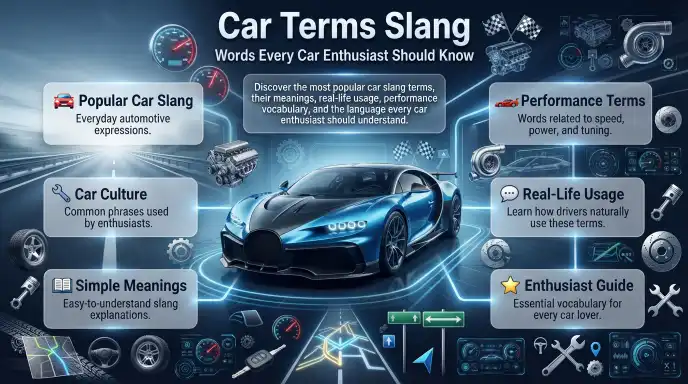
Car terms slang includes informal words and phrases that describe vehicles, driving, car parts, performance, and automotive culture.
Some slang is popular worldwide, while other expressions are common only in certain countries or communities. As a result, knowing these terms helps you understand conversations more easily.
In car slang, words like “whip,” “ride,” and “beater” are commonly used to describe vehicles, “whip” refers to a cool or stylish car, while “beater” means an old, run-down one.Cars have their own language, and many drivers use slang instead of formal automotive terms.
In this guide, you’ll learn the meaning of car terms slang, where people use it, common examples, real-life conversations, and the history behind these popular automotive expressions.
Quick Answer: Car Terms Slang
Car terms slang refers to informal words and phrases used by drivers, mechanics, racers, and car enthusiasts to describe vehicles, car parts, driving styles, or automotive culture. Many of these expressions appear in everyday conversations, social media, racing events, and online forums.
What Does Car Terms Slang Mean?
Car terms slang is the collection of informal words people use when talking about cars. Instead of using technical automotive language, drivers often choose shorter and more casual expressions.
For example, someone might say ride instead of car or beater instead of an old vehicle.
These slang words make conversations sound more natural. In addition, many terms show that the speaker understands car culture.
Everyday Car Slang
Many expressions are common in daily conversations.
Some popular examples include:
- Ride: A car or vehicle.
- Beater: An old or worn-out car.
- Whip: A stylish or expensive car.
- Sleeper: A car that looks ordinary but performs very well.
- Daily Driver: The vehicle someone uses every day.
Most drivers understand these expressions even if they are not car experts.
Performance Car Slang
Car enthusiasts also use slang when talking about speed and performance.
For example:
- Burnout: Spinning the tires to create smoke.
- Launch: A fast start from a stop.
- Boost: Turbocharger pressure.
- Redline: The engine’s maximum safe RPM.
- Pull: Strong acceleration.
These terms are especially common among racing fans and performance car owners.
Where Is Car Terms Slang Commonly Used?
People use car slang in many places because it makes conversations quicker and more engaging.
1. Car Meets
Car enthusiasts often gather to show their vehicles and discuss modifications. As a result, slang becomes part of almost every conversation.
2. Social Media
Car content creators frequently use slang on:
- TikTok
- YouTube
- X (Twitter)
Many captions, reels, and short videos include these informal expressions.
3. Online Forums
Automotive communities on Reddit, Discord, and other forums regularly use slang while discussing repairs, modifications, and performance upgrades.
4. Racing Events
Drivers, mechanics, and racing fans often use slang during competitions because it allows them to communicate quickly.
5. Everyday Conversations
Friends also use car slang when talking about buying, selling, repairing, or driving vehicles.
Is Car Terms Slang Rude, Offensive, or Harmless?
Most car terms slang is friendly and harmless. Drivers use these expressions to talk about vehicles, repairs, or performance in a casual way. However, a few slang words can sound disrespectful if they describe someone’s car negatively.
The meaning also depends on the conversation. Therefore, always consider the situation before using unfamiliar slang.
| Expression Type | Tone | Safe for Daily Use? |
| General car slang | Casual | Yes |
| Performance slang | Informal | Yes |
| Racing slang | Enthusiastic | Yes |
| Nicknames for old cars | Depends on context | Usually |
| Insulting car slang | Negative | No |
Using respectful language helps keep conversations friendly, especially when discussing someone else’s vehicle.
Real Life Examples of Car Terms Slang
The examples below show how people naturally use car slang in everyday conversations.
Example 1: Buying a Car
“My new ride gets amazing gas mileage.”
Here, ride simply means car.
Example 2: Talking About an Old Vehicle
“I’m keeping my beater until I can afford a new car.”
In this sentence, beater means an old vehicle that still works.
Example 3: Car Meet
“His whip looks incredible after the new paint job.”
Here, whip refers to a stylish or expensive car.
Example 4: Performance Discussion
“That sedan is a real sleeper.”
A sleeper looks ordinary but has impressive performance.
Example 5: Racing Conversation
“The turbo gives the engine plenty of boost.”
In this example, boost refers to pressure created by a turbocharger.
Origin and History of Car Terms Slang
Car slang has changed over many decades. As new vehicles and technologies appeared, drivers created informal words to describe them.
Early Automotive Culture
When cars became more common during the early 1900s, drivers began using simple nicknames instead of technical terms. These expressions spread through local communities and automobile clubs.
Influence of Racing
Motorsports introduced many performance-related slang words.
Terms like launch, burnout, and redline became popular because racers and mechanics used them during competitions. Later, everyday drivers adopted many of these expressions.
Movies and Popular Culture
Car-themed movies and television shows also helped popularize automotive slang.
Films about street racing introduced words such as ride, whip, and sleeper to audiences around the world.
Social Media Growth
Today, YouTube channels, TikTok creators, Instagram pages, and automotive influencers continue to introduce new slang.
As a result, car culture keeps creating fresh expressions every year.
Similar Car Slang or Related Terms
| Slang Term | Meaning | Common Use |
| Ride | Car or vehicle | Everyday conversations |
| Whip | Stylish car | Car culture |
| Beater | Old vehicle | Casual slang |
| Sleeper | Ordinary-looking fast car | Performance cars |
| Daily Driver | Everyday vehicle | Automotive community |
| Burnout | Tire spinning | Racing |
| Boost | Turbo pressure | Performance cars |
| Redline | Maximum engine RPM | Driving |
| Launch | Fast start | Racing |
| Project Car | Car being restored or modified | Car enthusiasts |
Why Do People Use Car Terms Slang?
People use car slang because it makes conversations shorter and more interesting.
Some common reasons include:
- Talking about cars with friends.
- Discussing vehicle modifications.
- Watching or creating automotive content.
- Joining car clubs and online communities.
- Following motorsports.
- Buying and selling vehicles.
- Sharing car photos on social media.
In addition, slang helps enthusiasts feel connected to the automotive community because many expressions are widely recognized among drivers.
When Should You Avoid Using Car Terms Slang?
Car slang is fun and easy to understand among car enthusiasts. However, it is not appropriate in every situation. Therefore, you should know when to use formal automotive language instead.
Avoid using car terms slang in these situations:
- Business meetings.
- Professional emails.
- Vehicle inspection reports.
- Insurance claims.
- Car repair invoices.
- Driving tests.
- Formal presentations.
Instead, use the correct automotive terms when speaking with insurance companies, mechanics, or government agencies. This makes your message clear and professional.
Platform Usage Comparison
Car slang appears across many online platforms where people discuss vehicles and automotive culture.
| Platform | Common Usage | Popularity |
| TikTok | Car edits, racing clips, modifications | Very High |
| Reels, photos, captions | Very High | |
| YouTube | Reviews, tutorials, builds | Very High |
| Automotive discussions | High | |
| Car groups and marketplaces | High | |
| Discord | Car communities and gaming | Medium |
| Car Forums | Repairs, tuning, performance | Very High |
Each platform has its own style. Even so, many popular slang terms remain the same across all of them.
Is It Safe to Use Car Terms Slang on Social Media?
Yes. Most car terms slang is completely safe to use on social media because it refers to vehicles, driving, or automotive culture.
However, avoid using disrespectful slang to criticize another person’s car. Likewise, do not encourage dangerous driving or illegal street racing while posting online.
Friendly expressions like ride, whip, daily driver, and project car are widely accepted and commonly used by car enthusiasts.
Common Misunderstandings About Car Terms Slang

Many beginners misunderstand automotive slang. The following examples explain the most common mistakes.
Thinking Every Slang Word Has Only One Meaning
Some car slang changes depending on the conversation.
For example, ride usually means a vehicle. However, in other situations, it may simply mean traveling in a car.
Assuming Car Slang Is the Same Everywhere
Automotive slang differs between countries.
For instance, American drivers may use whip, while British drivers often prefer different expressions. Therefore, regional differences are common.
Believing Only Racers Use Car Slang
Many people think racing drivers created all automotive slang.
In reality, everyday drivers, mechanics, collectors, and content creators use these expressions every day.
Using Slang in Professional Documents
Car slang works well in casual conversations.
However, technical reports, repair documents, and insurance paperwork require formal automotive terminology.
Key Takeaways
- Car terms slang includes informal words used in automotive conversations.
- Drivers use slang in daily life, online communities, and racing events.
- Words like ride, whip, beater, and sleeper are among the most popular expressions.
- Many slang terms describe a vehicle’s appearance or performance.
- Regional differences may change the meaning of some expressions.
- Formal situations require standard automotive language instead of slang.
- Learning car slang makes automotive discussions easier to understand.
Frequently Asked Questions
Q1. What are car terms slang?
Car terms slang are informal words and phrases people use to describe cars, driving, vehicle parts, and automotive culture.
Q2. What does “ride” mean in car slang?
Ride simply means a car or other personal vehicle.
Q3. What does “whip” mean in slang?
Whip refers to a stylish, expensive, or well-maintained car.
Q4. What is a “beater” car?
A beater is an old vehicle that still runs but usually has visible wear and tear.
Q5. What does “sleeper” mean in car slang?
A sleeper is a car that looks ordinary but delivers impressive speed or performance.
Q6. Is car slang different in every country?
Yes. Many countries have their own automotive slang, although some popular expressions are understood worldwide.
Q7. Where is car terms slang commonly used?
People use it at car meets, racing events, online forums, social media, repair shops, and everyday conversations.
Q8. Is car terms slang appropriate at work?
It depends on the workplace. Casual conversations are usually fine, but formal reports and business communication should use standard automotive terms.
Q9. Why do car enthusiasts use slang?
Car enthusiasts use slang because it makes conversations shorter, more engaging, and more connected to automotive culture.
Q10. How can I learn more car slang?
Watch automotive YouTube channels, attend local car meets, read car forums, and follow experienced drivers on social media.
Conclusion
Learning car terms slang makes it easier to understand conversations between drivers, mechanics, racers, and automotive enthusiasts. While many expressions like ride, whip, beater, and sleeper sound informal, they are common in everyday car culture. As a result, knowing these words helps you follow discussions both online and offline.
Whether you enjoy cars as a hobby or simply want to understand automotive conversations better, learning car slang is a practical skill. Finally, remember to use these expressions in casual settings and switch to formal automotive terms whenever the situation requires professional communication.
Read Related Articles:

Hi, I’m Sarah. I studied Communications at the University of Texas and have spent the last six years writing about internet culture and Gen Z slang across TikTok, Twitter, and everyday conversations. I focus on real usage, not just dictionary definitions.