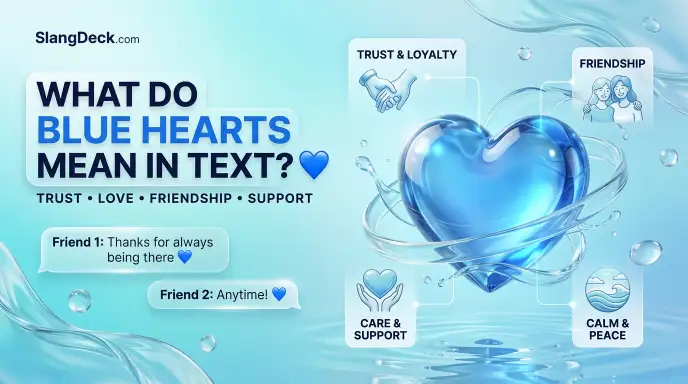
Blue hearts (💙) in text usually represent trust, loyalty, friendship, care, and emotional support. People use this emoji to show that they appreciate someone, feel connected to them, or want to express affection in a calm and friendly way.
You may see blue hearts in Instagram comments, Snapchat messages, TikTok captions, WhatsApp chats, and regular text messages. Friends often use them to show support, while couples may use them to express love and trust.
Unlike the traditional red heart ❤️, which is strongly associated with romance, a blue heart can feel more relaxed, peaceful, or friendly. However, it can also express romantic affection depending on the relationship.
If someone sends you 💙, you might wonder if they are showing friendship, love, or simply being nice. The surrounding conversation can help you understand what they mean.
What Do Blue Hearts Mean in Text Messages?
A blue heart emoji (💙) is a visual symbol used to communicate affection, trust, loyalty, and support. It is not a texting abbreviation or slang word. Instead, it adds an emotional touch to a message.
People use it in different ways depending on their relationships and conversations.
Here are some common meanings of the blue heart.
1. Trust and Loyalty
One of the common meanings of a blue heart is trust. Someone may use it to show that they value your friendship and believe they can depend on you.
Example:
Alex: “Thanks for always keeping your promises.”
Mia: “You can always count on me 💙”
Meaning: Mia is showing loyalty and trust.
2. Friendship and Appreciation
Friends often use blue hearts to show care and appreciation. It can be a warm way to thank someone or recognize their support.
Example:
Emma: “I’m lucky to have a friend like you.”
Lily: “Same here, bestie 💙”
Meaning: The blue heart expresses friendship and appreciation.
3. Love and Affection
A blue heart can also express love. It may be used between family members, close friends, or romantic partners.
Example:
A: “Love you. Take care of yourself.”
B: “Love you too 💙”
Meaning: The emoji communicates affection and care.
4. Emotional Support
People may send a blue heart when someone is feeling stressed, sad, or worried. It can show kindness without needing a long response.
Example:
Noah: “I’m nervous about tomorrow.”
Ryan: “You’ve got this. I’m here for you 💙”
Meaning: Ryan is offering encouragement and support.
5. Peace and Calmness
Blue is often associated with calmness, peace, and relaxation. Some people use the blue heart to create a gentle, positive feeling in their messages.
Example:
Mia: “Hope your day is peaceful.”
Olivia: “Thank you, wishing you the same 💙”
Meaning: The emoji adds a calm and caring tone.
6. Support for a Cause or Team
A blue heart may also represent support for a sports team, organization, community, or cause associated with the color blue.
Example:
Alex: “Our team finally won!”
Sam: “Let’s go! 💙”
Meaning: The blue heart shows excitement and support for the team.
7. A Favorite Color or Personal Style
Sometimes, a person sends a blue heart simply because blue is their favorite color or matches the look of their post.
Example:
A: “Your new profile picture looks great.”
B: “Thank you 💙”
Meaning: The emoji may be a personal style choice rather than a specific emotional message.
Is the Blue Heart Emoji Slang or an Abbreviation?
The blue heart is an emoji, not a traditional slang word or abbreviation.
Texting abbreviations such as IDK, BRB, and IMO use letters to represent longer phrases. A heart emoji works differently. It communicates feelings through a visual symbol.
For example:
- “Thank you 💙” shows appreciation.
- “Always here for you 💙” expresses support.
- “Love you, bestie 💙” shows affection.
- “We did it! 💙” can express excitement and team spirit.
Its meaning can change depending on the words and situation.
What Do Blue Hearts Mean on TikTok, Snapchat, Instagram, WhatsApp, and SMS?
The blue heart appears across popular messaging and social media platforms. Although its basic meanings are similar, people may use it differently depending on the type of content they share.
1. Blue Hearts on TikTok
On TikTok, people use 💙 in video captions, comments, and replies. It may express appreciation for a creator, support for a video, or affection for someone.
You might see it under friendship videos, emotional edits, sports content, or positive messages.
Example:
“Thank you for all the support 💙”
Here, the emoji expresses gratitude toward viewers or followers.
2. Blue Hearts on Snapchat
On Snapchat, friends may send blue hearts in private messages or add them to Snaps and stories.
It can show affection, appreciation, or a friendly connection.
Example:
A: “Had so much fun today.”
B: “Same! Let’s do it again 💙”
The blue heart adds a warm and friendly feeling.
3. Blue Hearts on Instagram
Instagram users often add blue hearts to captions, comments, bios, and direct messages.
Common uses include:
- Showing appreciation for a friend’s post.
- Expressing love and loyalty.
- Supporting a sports team.
- Matching a blue themed photograph.
- Adding a decorative touch to a profile.
Example: “Forever grateful for these people 💙”
4. Blue Hearts on WhatsApp
On WhatsApp, people use blue hearts in everyday conversations with friends, family, and partners.
They may send one to express love, thank someone, or offer emotional support.
Example:
A: “Don’t worry, everything will work out.”
B: “Thanks for believing in me 💙”
The emoji communicates gratitude and trust.
5. Blue Hearts in SMS Text Messages
People can also send 💙 through regular SMS messages when their devices and messaging services support emoji.
It may represent friendship, affection, support, or appreciation.
Example:
“Good luck with your exam tomorrow 💙”
The blue heart makes the message feel more personal and encouraging.
What Does It Mean When Someone Sends You a Blue Heart?
The meaning of 💙 can depend on who sends it and what you were discussing.
Here are some common situations.
When a Friend Sends You 💙
A friend may use it to show loyalty, appreciation, or affection. It can be a simple way to express that they value your friendship.
When Your Crush Sends You 💙
If your crush sends a blue heart, it may show affection or interest. However, it does not automatically mean they have romantic feelings.
Look at the rest of the conversation. Do they start conversations, ask about your day, or show interest in spending time with you?
When Your Partner Sends You 💙
A partner may use it to express love, trust, and emotional closeness. Some couples prefer blue hearts because they associate the color with peace, loyalty, or their favorite team.
When Someone Sends 💙 After a Compliment
It may simply mean thank you or show that they appreciate your kind words.
Example:
A: “You did an amazing job today.”
B: “That means a lot 💙”
The emoji adds warmth and appreciation.
When Someone Sends Only 💙
A single blue heart can be a complete response. It might communicate thanks, affection, support, or agreement.
If you are unsure, consider the previous message instead of assuming a specific meaning.
What Does a Blue Heart Mean From a Girl?
When a girl sends you a blue heart, she may be showing friendship, trust, appreciation, or affection.
For example:
- “Thank you 💙” may express gratitude.
- “Miss you 💙” may show affection or longing.
- “You’re the best 💙” may communicate appreciation.
- “Love you, bestie 💙” usually expresses friendly affection.
A blue heart does not automatically mean romantic interest. It can be a friendly gesture or simply her preferred emoji.
What Does a Blue Heart Mean From a Guy?
A guy may use 💙 to show care, loyalty, friendship, or affection.
For example:
You: “Hope everything goes well tomorrow!”
Him: “Thank you 💙”
This is a warm and appreciative response. It does not necessarily indicate romantic feelings.
What Does a Blue Heart Mean From Your Crush?
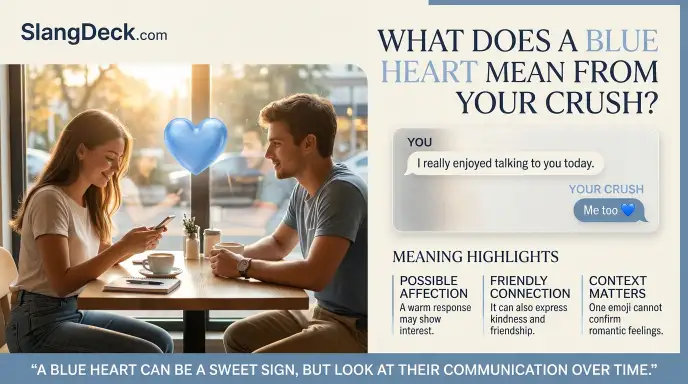
If your crush sends you a blue heart, it could be a sign of affection, friendliness, or interest.
For example:
You: “I really enjoyed talking to you today.”
Crush: “Me too 💙”
This response sounds warm and positive. Still, one emoji cannot confirm someone’s feelings.
Pay attention to how they communicate with you over time rather than judging everything from a single symbol.
Blue Heart vs. Other Heart Emojis: What’s the Difference?
Different heart colors can express different moods and feelings. However, their meanings are flexible, and people may use them in personal ways.
| Emoji | Common meaning |
| 💙 Blue Heart | Trust, loyalty, friendship, and support |
| ❤️ Red Heart | Love, romance, and affection |
| 🖤 Black Heart | Affection, dark humor, sadness, or dark aesthetics |
| 🤍 White Heart | Peace, pure love, and care |
| 💜 Purple Heart | Affection, admiration, and support |
| 💛 Yellow Heart | Friendship, happiness, and warmth |
| 💚 Green Heart | Nature, growth, and support |
| 🩵 Light Blue Heart | Calmness, gentle affection, and care |
| 💔 Broken Heart | Heartbreak or emotional pain |
These are common interpretations rather than strict definitions. A person may use a particular color simply because they like it.
10 Real Chat Examples of Blue Hearts
Here are ten realistic conversations showing how people might use 💙 in everyday messages.
1. Showing Friendship
A: “I’m so glad we’re friends.”
B: “Me too, bestie 💙”
Meaning: The blue heart expresses friendship and appreciation.
2. Thanking Someone
A: “I saved your favorite seat.”
B: “That’s so thoughtful. Thank you 💙”
Meaning: It communicates gratitude.
3. Offering Support
A: “I’m worried about my results.”
B: “Stay positive. I believe in you 💙”
Meaning: The blue heart shows encouragement and support.
4. Expressing Love
A: “You mean so much to me.”
B: “You mean a lot to me too 💙”
Meaning: It represents affection and emotional closeness.
5. Complimenting a Photo
A: “Your new picture looks amazing.”
B: “Thank you! 💙”
Meaning: The emoji adds a friendly and appreciative tone.
6. Talking About a Team
A: “Our team played so well today.”
B: “Best team ever 💙”
Meaning: The blue heart shows team support.
7. Missing Someone
A: “I wish you were here.”
B: “I miss you too 💙”
Meaning: It expresses affection and longing.
8. Sharing Good News
A: “I finally got the job!”
B: “That’s amazing! So proud of you 💙”
Meaning: The blue heart adds excitement and support.
9. Ending a Conversation
A: “Good night. Talk to you tomorrow.”
B: “Sleep well 💙”
Meaning: It makes the goodbye feel warm and friendly.
10. Showing Loyalty
A: “I know I can always trust you.”
B: “I’ll always be here for you 💙”
Meaning: The blue heart represents trust and loyalty.
How Do You Reply When Someone Sends You a Blue Heart?
Your reply should match the conversation and your relationship with the sender. You do not need to send another heart every time.
Here are some natural responses.
Funny Replies
If the conversation is playful, you could say:
- “Blue heart gang! 💙”
- “Why not a red one? 😂”
- “Someone loves blue!”
- “Matching your favorite color today?”
Casual Replies
For everyday conversations, try:
- “Thanks!”
- “Same to you 💙”
- “Appreciate it!”
- “You’re welcome!”
- “That’s sweet.”
Friendly Replies
If a friend sends you a blue heart, you can respond with:
- “Love you, bestie!”
- “Always got your back 💙”
- “You’re the best!”
- “Lucky to have you.”
- “Sending one back!”
Neutral Replies
If you do not know what the sender means, keep your response simple:
- “Thank you.”
- “That’s kind of you.”
- “I appreciate it.”
- “Thanks for the support.”
Romantic Replies
If your partner or someone you like sends you a blue heart, you might reply:
- “Love you too 💙”
- “You’re special to me.”
- “You make me smile.”
- “Sending all my love.”
- “My favorite person.”
Choose a response that feels natural instead of assuming the sender has a particular intention.
Are Blue Hearts Rude or Offensive?
No, blue hearts are not generally considered rude or offensive. They are commonly used to express friendship, trust, affection, appreciation, and emotional support.
However, their meaning can depend on the situation.
For example:
- “Thanks for helping me 💙” expresses appreciation.
- “Love you, bestie 💙” shows friendly affection.
- “I’m here for you 💙” communicates support.
- “Good luck tomorrow 💙” expresses encouragement.
Are Blue Hearts Safe to Use?
Yes. Blue hearts are generally safe for everyday conversations, social media comments, and personal messages.
They do not have an inherently offensive meaning. Still, consider the relationship and tone of the conversation.
Can You Use Blue Hearts at School or Work?
You can use blue hearts in casual messages with classmates, friends, or close coworkers.
For example, “Great job on the presentation 💙” may be appropriate in a friendly workplace chat.
However, a formal email or professional message usually works better without emojis. When communicating with teachers, managers, or clients, consider the setting before adding one.
Who Uses the Blue Heart Emoji?
People of different ages use blue hearts in messages and social media posts. It is not limited to one generation or online community.
Gen Z and Younger Social Media Users
Younger users may include 💙 in TikTok comments, Instagram captions, Snapchat messages, and friendship posts.
They may use it to express support, appreciation, or a personal aesthetic.
However, it would be inaccurate to say that only Gen Z uses this emoji.
Friends and Family Members
Friends and family members often use blue hearts to express love, trust, and appreciation.
It can make a simple message feel more personal.
Couples
Romantic partners may use blue hearts to express affection and emotional connection. Some choose blue instead of red because they like the color or associate it with loyalty.
Sports Fans and Online Communities
People may also use blue hearts to support teams, groups, or causes that use blue as their recognizable color.
How Often Does It Appear Online?
The blue heart is a recognizable emoji used across major messaging and social media platforms. Its frequency varies by platform, community, and personal preference.
There is no single reliable usage rate that applies to every age group or social network.
Where Did the Blue Heart Emoji Come From?
The blue heart emoji is part of the wider development of digital communication.
Before modern emoji keyboards became common, people often used text symbols such as <3 to represent a heart. As emoji became more widely available, different heart colors gave users more ways to express emotions and personal preferences.
The blue heart was included in Unicode 6.0 in 2010, making it part of the standard set of emoji characters.
Over time, people began using it for different purposes, including friendship, loyalty, affection, support, and team pride.
There is no single documented event that explains all of its current meanings. Its use has developed naturally through texting, social media, and online culture.
Blue Hearts vs. Common Texting Abbreviations
A blue heart is an emoji, while IDK, IDC, IMO, and BRB are texting abbreviations. They can all appear in the same conversation, but they serve different purposes.
| Term | Meaning | Type | Usage | Popularity |
| 💙 Blue Heart | Trust, loyalty, affection, or support | Emoji | Expressing feelings | Recognizable |
| IDK | I Don’t Know | Abbreviation | Showing uncertainty | Very common |
| IDC | I Don’t Care | Abbreviation | Showing indifference | Very common |
| IMO | In My Opinion | Abbreviation | Sharing an opinion | Common |
| BRB | Be Right Back | Abbreviation | Temporarily leaving a chat | Common |
For example, someone might write “IDK, but I trust you 💙.” The abbreviation communicates uncertainty, while the blue heart adds affection or reassurance.
Real World Usage Example: When Would Someone Send a Blue Heart?
Imagine that a student is nervous about an upcoming exam. They message a close friend and explain that they are worried about the result.
Friend A: “I’m really stressed about tomorrow’s exam.”
Friend B: “You’ve studied hard. I know you can do it 💙”
In this situation, the blue heart expresses encouragement, trust, and emotional support.
Now imagine a different situation. Someone shares a photograph of their favorite football team wearing blue uniforms and writes:
Caption: “Our team forever 💙”
Here, the emoji represents team loyalty rather than romantic love.
These examples show why the meaning of a blue heart depends on the situation. The same symbol can communicate different feelings in different conversations.
Common Misunderstandings About Blue Hearts
People sometimes assume that every heart emoji has one fixed meaning. That can lead to unnecessary confusion.
Here are a few misunderstandings worth avoiding.
1. A Blue Heart Always Means Friendship
Not necessarily. It can also express romantic love, family affection, appreciation, or support.
2. A Blue Heart Means Someone Is Not Interested Romantically
This is not true. A person can use a blue heart while expressing romantic feelings. The color alone cannot tell you how someone feels.
3. A Blue Heart Always Represents Sadness
No. It is often used in positive conversations about friendship, trust, and appreciation.
4. Only Girls Use Blue Hearts
People of all genders use this emoji. It is not limited to girls or any particular group.
5. The Blue Heart Has the Same Meaning Everywhere
Although its common meanings are similar, people can use it differently depending on their culture, personal preferences, and online community.
Frequently Asked Questions
What do blue hearts mean in text messages?
Blue hearts (💙) usually represent trust, loyalty, friendship, love, and emotional support. Their meaning depends on the conversation and the relationship between the people messaging.
What does a blue heart mean on TikTok?
On TikTok, a blue heart can express appreciation, support, affection, or team loyalty. People often use it in video captions, comments, and replies.
Is the blue heart emoji slang?
No. The blue heart is an emoji rather than a slang word or texting abbreviation. It is a visual symbol used to express emotions.
Are blue hearts rude or offensive?
No, blue hearts are generally not rude or offensive. They are commonly used to show affection, appreciation, trust, and support.
How should you reply to a blue heart?
You can reply with “Thank you,” “Same here 💙,” “Love you too,” or “I appreciate it.” Choose a response that fits the conversation.
What does a blue heart mean from a girl?
A girl may use 💙 to show friendship, trust, appreciation, or affection. It does not automatically mean romantic interest.
What does a blue heart mean from a guy?
A guy may send a blue heart to express care, loyalty, friendship, or romantic affection. The surrounding conversation helps explain his intention.
What does a blue heart mean from your crush?
It may be a sign of affection or interest, but it could also be friendly. Look at the person’s overall behavior instead of relying on one emoji.
What does two blue hearts mean?
Two blue hearts (💙💙) can add extra emphasis to affection, appreciation, or support. They do not have one fixed meaning.
Is a blue heart better than a red heart?
Neither is better. A red heart is commonly associated with love and romance, while a blue heart often communicates trust, loyalty, friendship, and support.
Key Takeaways
- 💙 Blue hearts commonly represent trust, loyalty, friendship, love, and emotional support.
- The blue heart is an emoji, not a slang word or abbreviation.
- People use it on TikTok, Snapchat, Instagram, WhatsApp, and SMS.
- A blue heart from a girl or guy does not automatically indicate romantic interest.
- It can also represent team loyalty, personal style, or appreciation.
- Its meaning depends on the message and relationship.
- Blue hearts are generally safe to use in everyday conversations.
Conclusion
Blue hearts in text messages usually express trust, loyalty, friendship, affection, and emotional support. People use 💙 across TikTok, Snapchat, Instagram, WhatsApp, and regular text messages to make their conversations feel warmer and more personal.
If someone sends you a blue heart, consider the words around it and your relationship with that person. It might be a friendly gesture, a sign of appreciation, or a way to express love. The emoji does not have one fixed meaning, so context is always important.
Continue Reading
- What Do Black Hearts Mean in Text? 🖤 Meaning & Symbolism
What Do Cherries Mean in Text? Decoding 🍒 Emoji in Bios & DMs - What Does BI Mean in Text? Is It Slang, a Typo or Something Else?

Hey, I’m Jordan. I grew up in a bilingual household in LA, so Spanish and Mexican American slang has always been part of how I talk. I’ve been writing online content for five years, explaining terms the way I’d explain them to a friend meaning, tone, and when it’s actually okay to use.