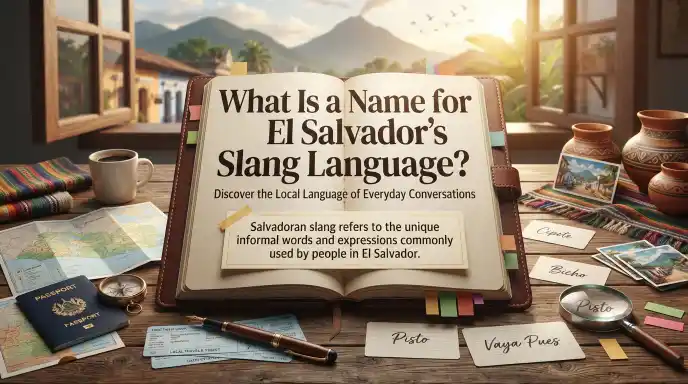
What is a name for El Salvador’s slang language? The most common name is Salvadoran slang or Salvadoran Spanish slang. It is not a separate language. Instead, it is a collection of informal Spanish words and expressions that people in El Salvador use every day.
If you have heard words like cipote, chivo, or pisto, you have already come across Salvadoran slang. These words are part of daily conversations and reflect the country’s culture and identity.
Salvadoran slang has grown over many generations. Today, people also use it on social media, in music, on TV, and in online chats. Although Spanish is El Salvador’s official language, locals often mix standard Spanish with regional slang.
Quick Answer: What Is a Name for El Salvador’s Slang Language?
The slang language of El Salvador is commonly called Salvadoran slang or Salvadoran Spanish slang. It is an informal style of Spanish, not a separate language.
What Is Salvadoran Slang?
Salvadoran slang is the collection of informal words and phrases used in everyday conversations across El Salvador.
These expressions help people sound friendly and natural. They also make it easier to express humor, emotions, and local culture.
For example, many Salvadorans say pisto instead of the standard Spanish word for money.
They also use cipote or cipota instead of saying child.
Learning these words makes it easier to understand native speakers.
Learning these expressions makes it much easier to understand conversations with native Salvadoran speakers.
Common Salvadoran Slang Words
| Slang Word | Meaning |
| Cipote / Cipota | Boy or girl; child |
| Chivo | Cool, great, awesome |
| Pisto | Money |
| Bicho / Bicha | Kid or young person |
| Bolado | Thing or object |
| Bolo | Drunk |
| Vaya pues | Okay then; alright |
| Chunche | Thing or item (used when you don’t know the exact name) |
| Maje | Friend, dude, or someone (depending on context) |
| Cabal | Exactly; that’s right |
These are among the most common words you will hear in everyday Salvadoran conversations.
Is There an Official Name for El Salvador’s Slang Language?
No. There is no official language called El Salvador’s slang language.
The country’s only official language is Spanish.
People usually describe the informal way of speaking with names such as:
- Salvadoran slang
- Salvadoran Spanish slang
- Salvadoran colloquial Spanish
- Salvadoran Spanish
All of these names refer to the same informal style of speech.
Is Salvadoran Slang Rude, Offensive, or Neutral?
Most Salvadoran slang is friendly and neutral.
People use it every day with:
- Family
- Friends
- Neighbors
- Classmates
- Coworkers
Some slang words, however, can sound rude if the tone is aggressive or the situation is inappropriate.
For example:
- Chivo means “cool” or “awesome.”
- Pisto simply means “money.”
Before using unfamiliar slang, always think about the context and your relationship with the other person.
Where Is Salvadoran Slang Commonly Used?
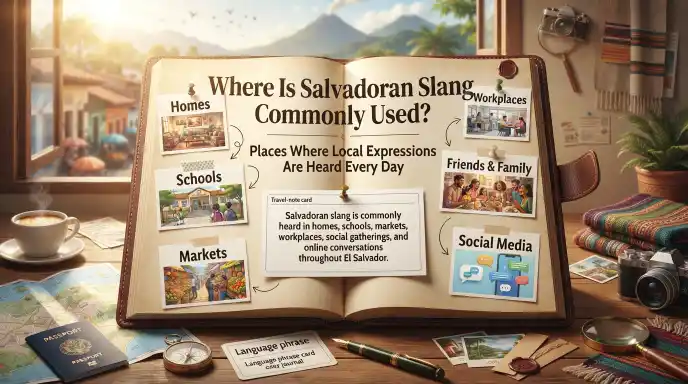
You can hear Salvadoran slang almost everywhere in daily life.
It is common in:
- Daily conversations
- Family gatherings
- Schools
- Universities
- Local markets
- Restaurants
- Television shows
- Salvadoran music
- YouTube videos
- TikTok
- Text messages
- Online chats
Many Salvadorans living abroad also continue using these expressions to stay connected to their culture.
Why Do People Use Salvadoran Slang?
People use Salvadoran slang because it makes conversations feel warm, natural, and personal.
It also helps people show pride in their culture and connect with others.
Common reasons include:
- To speak naturally
- To express local identity
- To make conversations relaxed
- To add humor
- To connect with family and friends
- To sound like a native speaker
Real Life Examples of Salvadoran Slang
Here are some examples showing how Salvadoran slang is used in everyday conversations.
Friendly Conversation
Carlos: How was the concert?
Luis: It was chivo! We had an amazing time.
Here, chivo means “cool” or “awesome.”
Talking About Money
Ana: Do you have enough pisto for lunch?
Maria: Yes, I brought some with me.
In this example, pisto means money.
Family Conversation
Mother: Where’s your little brother?
Daughter: The cipote is playing outside.
Here, cipote means boy or child.
Casual Chat
Friend: Can you hand me that bolado?
Reply: Sure. Here you go.
In this sentence, bolado means “thing” or “object.”
Social Media Post
“What a chivo weekend! Can’t wait to do it again.”
Here, chivo expresses excitement about a fun experience.
Everyday Conversation
Friend: Do you know where my chunche is?
Reply: It’s on the kitchen table.
In Salvadoran slang, chunche refers to an object when the speaker does not know or remember its exact name.
Origin and Background of Salvadoran Slang
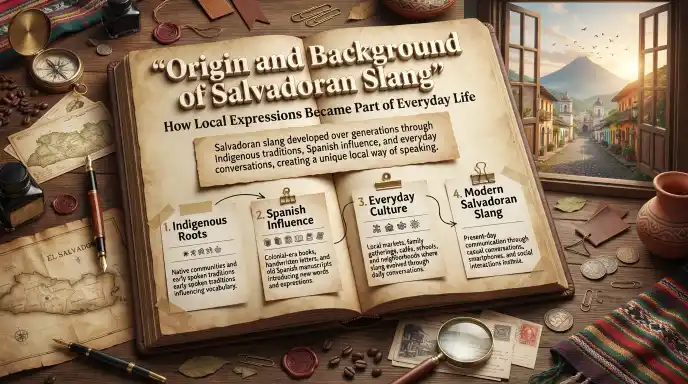
SSalvadoran slang has developed over many generations.
Most expressions come from Spanish. Others were influenced by Nahuat, an Indigenous language once spoken in parts of El Salvador.
As communities grew, people created new words for everyday life, family, food, money, and emotions.
Today, social media, music, television, and online videos continue to spread Salvadoran slang around the world.
Many Salvadorans living in countries such as the United States and Canada still use these expressions to stay connected to their roots.
Salvadoran Slang vs. Other Spanish Slang
Every Spanish-speaking country has its own unique slang. While some expressions are shared, many words are understood only within a particular country.
| Country | Example Slang | Meaning |
| El Salvador | Chivo | Cool or awesome |
| Mexico | Güey | Dude or friend |
| Argentina | Che | Hey or friend |
| Spain | Guay | Cool |
| Colombia | Parcero | Friend or buddy |
| Puerto Rico | Brutal | Amazing or excellent |
Although these words have similar purposes, they reflect the culture and identity of each country.
When Should You Avoid Using Salvadoran Slang?
Salvadoran slang is best used in informal conversations.
Avoid using it in:
- Business emails
- Academic writing
- Legal documents
- Official government forms
- Professional presentations
- Formal speeches
If you are speaking with someone from another Spanish-speaking country, remember that they may not recognize certain Salvadoran expressions.
Using standard Spanish is usually the safest choice in formal or international situations.
Impact of Salvadoran Slang on Communication
Salvadoran slang makes conversations feel natural and authentic.
It also helps speakers express their culture and personality.
If you are learning Spanish, knowing these expressions can help you:
- Understand everyday conversations
- Watch Salvadoran TV shows
- Enjoy local music
- Read social media posts
- Connect with native speakers
- Learn more about Salvadoran culture
Is Salvadoran Slang Safe for Social Media?
Yes. Most Salvadoran slang is safe to use on social media.
People often use it on:
- TikTok
- X
Creators include these words in videos, captions, comments, and memes.
However, avoid using slang you do not fully understand. Some expressions can change meaning depending on the tone or situation.
Common Misunderstandings About Salvadoran Slang
Many people misunderstand Salvadoran slang.
Here are a few common myths.
Myth 1: Salvadoran slang is a separate language.
Fact: It is simply informal Spanish spoken in El Salvador.
Myth 2: Everyone uses the same slang.
Fact: Some words change by region, age, or social group.
Myth 3: Salvadoran slang is always offensive.
Fact: Most expressions are friendly and used in everyday conversations.
Myth 4: It is the same as Mexican Spanish.
Fact: Every Spanish-speaking country has its own slang and vocabulary.
Myth 5: Learning slang is enough.
Fact: Standard Spanish is still important. Slang works best when you already understand basic Spanish.
Key Takeaways
- Salvadoran slang is the informal vocabulary used by people in El Salvador.
- It is also known as Salvadoran Spanish slang and is not a separate language.
- Popular words include chivo, cipote, pisto, bolado, and maje.
- Salvadoran slang is commonly used in daily conversations, social media, music, and entertainment.
- Most expressions are friendly and help speakers express local culture and identity.
- Learning Salvadoran slang can improve your understanding of native conversations and make it easier to connect with locals.
Frequently Asked Questions
1. What is the slang language of El Salvador called?
The slang spoken in El Salvador is commonly called Salvadoran slang or Salvadoran Spanish slang. It is not a separate language but an informal variety of Salvadoran Spanish.
2. Is Salvadoran slang different from Mexican Spanish?
Yes. While both countries speak Spanish, many slang words are different. For example, Salvadorans often say chivo for “cool,” while Mexicans may use padre or chido.
3. What does “cipote” mean in El Salvador?
Cipote means boy or child, while cipota refers to a girl. These are among the most common Salvadoran slang words.
4. What does “pisto” mean in Salvadoran slang?
In Salvadoran slang, pisto means money. It is one of the most frequently used informal words in everyday conversations.
5. Is Salvadoran slang difficult to learn?
No. Most Salvadoran slang is easy to learn because the expressions are commonly used in daily conversations. Listening to native speakers and practicing regularly can help you understand them quickly.
6. Can I use Salvadoran slang when visiting El Salvador?
Yes. Using common slang words appropriately can make conversations feel more natural and friendly. However, it is best to learn the meaning and context of each expression before using it.
Conclusion
If you’ve ever wondered, “What is a name for El Salvador’s slang language?” the answer is simple. It is commonly called Salvadoran slang or Salvadoran Spanish slang.
Rather than being a separate language, it is a collection of informal words and expressions that make everyday conversations more natural and reflect the country’s unique culture.
If you’re traveling to El Salvador, learning Spanish, or simply curious about regional expressions, understanding Salvadoran slang can help you communicate more confidently.
Learning common words like chivo, cipote, and pisto will also give you a deeper appreciation of Salvadoran culture and the way locals speak every day.
Popular Slang Words:

Hi, I’m Sarah. I studied Communications at the University of Texas and have spent the last six years writing about internet culture and Gen Z slang across TikTok, Twitter, and everyday conversations. I focus on real usage, not just dictionary definitions.