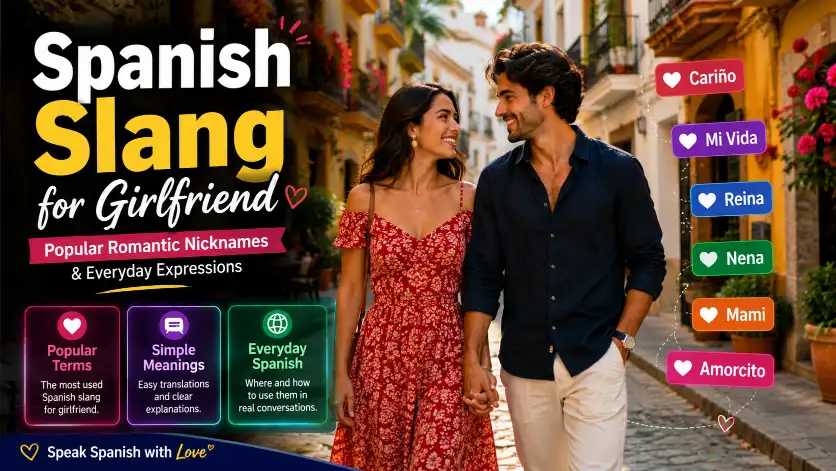
Spanish slang for girlfriend includes affectionate and informal words people use instead of the standard term novia (girlfriend).
These nicknames are common in everyday conversations, text messages, social media, and romantic relationships across many Spanish speaking countries. However, the exact slang word can vary by region, and a term that is common in one country may sound unusual in another.
Many people search for Spanish slang for girlfriend because they want to understand romantic expressions used by native speakers or find a cute nickname for their partner. In this guide, you’ll learn the meanings of popular Spanish slang terms for a girlfriend, where they’re commonly used, regional differences, real life examples, and when each expression is appropriate.
If you’re learning Spanish or simply curious about its romantic slang, this article will help you use these expressions naturally and respectfully.
Quick Answer: Spanish Slang for Girlfriend
Spanish slang for girlfriend includes affectionate terms such as novia, morra (Mexico), jeva/jeba (Caribbean Spanish), flaca (in some countries, used affectionately), and pet names like mi amor or mi vida. The right term depends on the country and the relationship.
What Is Spanish Slang for Girlfriend?
Spanish slang for girlfriend refers to informal and affectionate words people use instead of the standard word novia.
Some slang terms are used only in certain countries, while others are understood across much of the Spanish speaking world. Because Spanish varies by region, it’s important to know where a particular expression is commonly used.
Common Spanish Slang for Girlfriend
1. Morra (Mexico)
Meaning: A casual slang term for a girlfriend or young woman.
Example:
“Mi morra y yo vamos al cine.”
(My girlfriend and I are going to the movies.)
2. Jeva / Jeba (Caribbean Spanish)
Meaning: An informal word for a girlfriend or woman, commonly heard in countries like Puerto Rico, the Dominican Republic, and parts of Cuba.
Example:
“Ella es mi jeva.”
(She is my girlfriend.)
3. Flaca (Argentina, Chile, Peru, and other countries)
Meaning: Literally means “skinny,” but it is often used affectionately as a romantic nickname, regardless of body type.
Example:
“Hola, flaca. ¿Cómo estuvo tu día?”
(Hi, sweetheart. How was your day?)
4. Mi Amor
Meaning: “My love.”
One of the most common romantic nicknames used throughout the Spanish speaking world.
Example:
“Buenos días, mi amor.”
(Good morning, my love.)
5. Mi Vida
Meaning: “My life.”
A warm and affectionate nickname for a romantic partner.
Example:
“Te extraño, mi vida.”
(I miss you, my love.)
6. Cariño
Meaning: Darling, dear, or sweetheart.
This affectionate term is commonly used between couples and family members.
Example:
“Gracias, cariño.”
(Thanks, darling.)
7. Nena
Meaning: Baby girl or babe.
A popular romantic nickname in many Spanish speaking countries.
Example:
“Hola, nena.”
(Hi, babe.)
Are These Terms Used Everywhere?
No. Spanish slang changes from country to country.
For example:
| Country/Region | Common Slang for Girlfriend |
| Mexico | Morra |
| Puerto Rico | Jeva |
| Dominican Republic | Jeva / Jeba |
| Cuba | Jeva (in some contexts) |
| Argentina | Flaca |
| Spain | Novia, Cariño, Chica (depending on context) |
Because regional meanings vary, it’s always best to learn which expressions are natural in the country where you’ll be speaking Spanish.
Why Do People Use Spanish Slang for Girlfriend?
People use these expressions because they sound:
- More affectionate
- More natural in everyday conversations
- Friendly and romantic
- Less formal than novia
- Personal and expressive
Many of these nicknames are commonly heard in conversations, text messages, love songs, movies, and social media.
Is Spanish Slang for Girlfriend Rude, Offensive, or Harmless?
Most Spanish slang for girlfriend is harmless and affectionate. These terms are commonly used between romantic partners to express love, closeness, or affection. However, some slang words are regional and may sound unusual or even disrespectful if used in the wrong country or with someone you don’t know well.
| Term | Tone | Appropriate? |
| Mi amor | Loving | ✅ Yes |
| Mi vida | Affectionate | ✅ Yes |
| Cariño | Warm and friendly | ✅ Yes |
| Nena | Romantic | ✅ Yes |
| Morra | Casual (Mexico) | ✅ Yes, in Mexico |
| Jeva | Informal (Caribbean) | ✅ Yes, depending on region |
| Flaca | Affectionate | ✅ Yes, if your partner is comfortable with it |
When in doubt, use widely accepted terms like mi amor, cariño, or novia.
Where Is Spanish Slang for Girlfriend Commonly Used?
1. Everyday Conversations
Couples often use affectionate slang instead of saying novia.
Example
“Voy al cine con mi morra.”
(I’m going to the movies with my girlfriend.)
2. Text Messages
Romantic nicknames are very common in texting.
Example
“Buenas noches, mi amor .”
(Good night, my love.)
3. Social Media
People frequently use these expressions in captions, comments, and direct messages.
Example
“Mi vida, gracias por hacerme feliz.”
(My love, thank you for making me happy.)
4. Love Songs
Many Spanish language songs use affectionate nicknames like:
- Mi amor
- Mi vida
- Cariño
- Nena
5. Movies and TV Shows
Romantic slang appears naturally in Spanish language films and television series, reflecting everyday conversations.
Real Life Examples
Example 1: Casual Conversation
Carlos: ¿Dónde está tu morra?
Luis: Está en casa.
Meaning: Carlos asks where Luis’s girlfriend is.
Example 2: Text Message
Ana: Buenos días, mi amor.
David: Buenos días .
Meaning: A loving morning greeting between partners.
Example 3: Social Media Caption
“Mi vida, gracias por estar siempre conmigo.”
(My love, thank you for always being with me.)
Example 4: Caribbean Spanish
Pedro: Ella es mi jeva.
Meaning: Pedro is introducing his girlfriend.
Example 5: Everyday Romance
Juan: Hola, cariño.
Sofía: ¡Hola!
Meaning: Juan greets his partner with an affectionate nickname.
Origin and Cultural Background
Spanish has many affectionate expressions because relationships and family play an important role in many Spanish speaking cultures.
Some romantic slang developed from:
- Regional dialects
- Everyday conversations
- Youth culture
- Local traditions
- Popular music
- Television and movies
Terms such as morra and jeva are strongly associated with particular regions, while mi amor, mi vida, and cariño are understood almost everywhere Spanish is spoken.
Because Spanish varies from country to country, it’s always helpful to learn which expressions are common in the region you’re visiting or speaking with.
Similar Romantic Spanish Terms
| Term | Meaning | Commonly Used? |
| Novia | Girlfriend | ✅ Standard |
| Mi amor | My love | ✅ Very common |
| Mi vida | My life | ✅ Very common |
| Cariño | Darling | ✅ Very common |
| Amor | Love | ✅ Common |
| Corazón | Sweetheart | ✅ Common |
| Princesa | Princess | ✅ Romantic |
| Reina | Queen | ✅ Romantic |
Spanish Slang vs. Standard Spanish
| Slang Term | Standard Equivalent | Usage |
| Morra | Novia | Mexico |
| Jeva | Novia | Caribbean Spanish |
| Flaca | Novia (nickname) | Several Latin American countries |
| Mi amor | Novia (pet name) | Most Spanish speaking countries |
| Cariño | Novia (pet name) | Widely used |
The standard word novia is appropriate everywhere, while slang expressions are best used in casual conversations and with people who are familiar with the local dialect.
Who Commonly Uses These Terms?
Spanish slang for girlfriend is commonly used by:
- Couples
- Teenagers
- Young adults
- Married partners
- Friends talking casually
- Social media users
- Musicians and singers
- Content creators
These affectionate expressions are a natural part of daily life in many Spanish speaking countries, but the preferred term often depends on the local culture and region.
When Should You Avoid Using Spanish Slang for Girlfriend?
Although these expressions are affectionate, they are not suitable in every situation.
Avoid using Spanish slang for girlfriend when:
- Speaking with someone you have just met
- Communicating in professional or business settings
- Writing formal emails or official documents
- Using a regional slang term without knowing its local meaning
- Addressing someone who may not be comfortable with romantic nicknames
If you’re unsure which term is appropriate, novia, mi amor, or cariño are generally the safest and most widely understood choices.
Common Misunderstandings About Spanish Slang for Girlfriend
People think all Spanish speaking countries use the same slang.
No. Spanish varies greatly by country. A term that’s common in Mexico may be uncommon or have a different meaning in Spain, Argentina, or the Caribbean.
“Novia” is slang.
No. Novia is the standard Spanish word for girlfriend. Slang terms like morra and jeva are informal alternatives used in specific regions.
Every romantic nickname means “girlfriend.”
Not exactly. Terms like mi amor, mi vida, and cariño are affectionate pet names. They don’t literally mean girlfriend, but couples commonly use them to address each other.
You can use any slang term anywhere.
No. Regional slang should be used carefully because meanings and popularity differ across Spanish speaking countries.
Why Do People Use Spanish Slang for Girlfriend?
People use these expressions because they make conversations feel more personal and affectionate.
Common reasons include:
- Showing love and affection
- Expressing closeness in a relationship
- Speaking naturally with a partner
- Following local customs and regional speech
- Adding warmth to text messages and conversations
- Reflecting cultural traditions
Many of these nicknames are heard daily in homes, social media, music, and movies throughout the Spanish speaking world.
Frequently Asked Questions
1. What is the Spanish slang for girlfriend?
Common Spanish slang for girlfriend includes morra (Mexico), jeva (Puerto Rico, the Dominican Republic, and parts of Cuba), and affectionate nicknames like mi amor, mi vida, and cariño.
2. What is the standard Spanish word for girlfriend?
The standard Spanish word for girlfriend is novia. It is understood in all Spanish speaking countries.
3. Is “morra” a girlfriend?
Yes. In Mexican Spanish, morra can refer to a girlfriend or a young woman, depending on the context.
4. What does “jeva” mean in Spanish slang?
Jeva is a Caribbean Spanish slang term that commonly means girlfriend or woman. It is especially popular in Puerto Rico, the Dominican Republic, and is also heard in parts of Cuba.
5. Is “mi amor” the same as girlfriend?
No. Mi amor means “my love.” It is a romantic nickname rather than the literal word for girlfriend.
6. Which Spanish slang term is used in Mexico?
The slang term morra is one of the most common informal words for girlfriend in Mexico.
7. Can I use these slang words in Spain?
Some affectionate terms like mi amor and cariño are common in Spain, but regional slang such as morra or jeva may not sound natural there.
8. Are Spanish slang terms for girlfriend respectful?
Yes, when used appropriately. Most of these expressions are affectionate and respectful between romantic partners. However, always consider the local culture and your relationship with the person.
9. Why are there different slang words for girlfriend in Spanish?
Spanish is spoken in many countries, and each region has developed its own vocabulary, pronunciation, and slang over time. That’s why terms for a girlfriend vary across the Spanish speaking world.
10. Can I use “novia” instead of slang?
Yes. Novia is the safest and most universally understood word for girlfriend. If you’re unsure about regional slang, using novia is always a good choice.
Conclusion
Learning Spanish slang for girlfriend is a great way to understand how native speakers express affection in everyday conversations. While novia remains the standard word for girlfriend, regional slang terms like morra and jeva, along with affectionate nicknames such as mi amor, mi vida, and cariño, add personality and warmth to romantic communication.
Because Spanish differs from country to country, it’s important to use these expressions in the right cultural context. Understanding regional differences will help you speak more naturally, avoid misunderstandings, and communicate respectfully with Spanish speakers.
Related Slang Guides You May Also Like

Hey, I’m Jordan. I grew up in a bilingual household in LA, so Spanish and Mexican American slang has always been part of how I talk. I’ve been writing online content for five years, explaining terms the way I’d explain them to a friend meaning, tone, and when it’s actually okay to use.