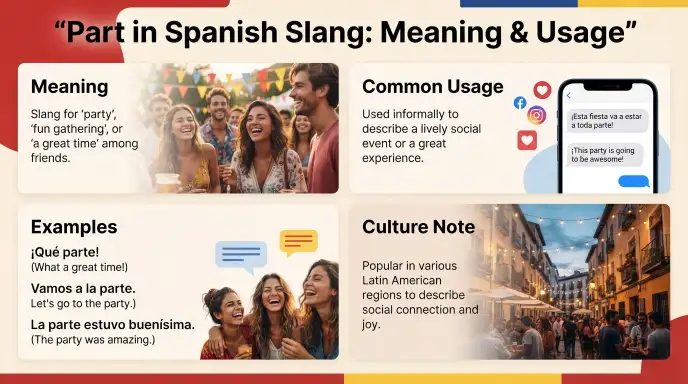
A party in Spanish slang is usually called fiesta, but the slang changes from one country to another.
People in Mexico, Spain, Argentina, Chile, Peru, Colombia, and Puerto Rico all use different words for a party. Some slang is used for a casual get-together. Other words describe a loud night with music and dancing.
Many Spanish learners know words like fiesta or reunión. Native speakers often use local slang instead. These expressions help you sound more natural in conversations.
You may hear these words while traveling, texting friends, watching Latin music videos, or scrolling through TikTok and Instagram. Learning them makes it easier to understand real conversations and local culture.
Quick Answer: Party in Spanish Slang
In Spanish slang, party is most commonly fiesta, which means a celebration, gathering, or social event where people have fun, dance, eat, or drink. Depending on the country, native speakers also use slang words like peda (Mexico), rumba (Colombia and Cuba), carrete (Chile), and joda (Argentina and Uruguay) to refer to a party or a fun night out.
What Does “Party” Mean in Spanish Slang?
In standard Spanish, la fiesta means a party, celebration, or festival.
Spanish slang gives the word a more specific meaning. It can describe the type of event, the mood, or the atmosphere.
Some slang words refer to:
- A wild night with music and dancing.
- A house party with friends.
- A street celebration.
- A family gathering or holiday event.
The meaning depends on the country and the situation.
The Most Popular Regional Words for Party in Spanish Slang
Spanish slang is different across the Spanish-speaking world. One word may sound natural in one country but unusual in another.
1. Mexico: Fiesta, Parranda, and Reventón
Mexico has many slang words for parties.
Fiesta (or Peda) is a popular term for a party with friends. It often includes food, drinks, and music.
Parranda describes a long night of celebrating. People may visit several places before going home.
Reventón means a huge party. These events usually have loud music, large crowds, and dancing until late.
2. Spain: Fiesta, Juerga, and Marcha
People in Spain use several common slang words.
Fiesta is the most popular word for going out and having fun.
Juerga means a lively party or an exciting night out. A person who enjoys this lifestyle is called a juerguista.
Marcha describes the nightlife or party atmosphere of a city. It can also describe a place with lots of energy.
3. Puerto Rico and the Caribbean: Fiesta and Parranda
Music plays a big role in Caribbean culture. Party slang reflects that lifestyle.
Fiesta is common in daily conversations. It also appears in many Reggaeton songs.
Parranda has another meaning in Puerto Rico. It refers to a Christmas tradition where groups visit homes, sing songs, and celebrate together.
4. Colombia: Fiesta and Parranda
Colombians enjoy music, dancing, and social gatherings.
Fiesta is the most common word for a party.
Parranda usually means a lively celebration with live music, dancing, and friends.
5. Argentina and Uruguay: Fiesta and Joda
Young people in Argentina and Uruguay often use these slang words.
Fiesta describes a party or social event.
Joda is an informal word for a house party or a fun night out with friends.
Comparison Table: Regional Spanish Party Slang
The table below makes it easy to compare the most common slang words for a party in different Spanish-speaking countries.
| Country / Region | Common Slang Word | Verb (To Party) | Typical Meaning |
| Mexico | Fiesta, Parranda | Ir de fiesta, Parrandear | Loud and social parties |
| Spain | Fiesta, Juerga | Ir de fiesta, Ir de juerga | Nightlife and clubbing |
| Puerto Rico | Fiesta | Janguear | Music and dancing |
| Colombia | Fiesta, Parranda | Irse de fiesta, Parrandear | High-energy celebrations |
| Argentina | Fiesta, Joda | Ir de joda | House parties and nights out |
| Chile | Carrete | Carretear | Casual or large gatherings |
| Peru | Tono | Tonear | General parties and dance events |
Where Is “Party in Spanish Slang” Commonly Used?
You can hear these slang words in many places.
Social Media
TikTok, Instagram, Snapchat, and Facebook are full of party slang. Native speakers use these words in captions, comments, and hashtags.
Messaging Apps
Friends use these expressions in WhatsApp groups, Discord servers, and text messages. They often use them while planning weekend events or inviting others.
Music and Pop Culture
Many Latin songs include party slang. Reggaeton, Latin Trap, Salsa, and Cumbia artists use these words in their lyrics. Fans hear them often and begin using them in daily conversations.
Is Party Slang in Spanish Rude or Offensive?
Most party slang is friendly and safe. People use it in casual conversations with friends and family.
Words like fiesta, juerga, parranda, carrete, and tono are not offensive.
Some words need more care.
In Mexico, peda is linked to drinking. Friends use it often. It may sound rude in formal situations.
Some words also have different meanings. For example, joda can mean a party in Argentina. In another place, it may describe trouble or joking around.
Think about the country and the situation before using local slang.
Real Life Examples: How to Use Party Slang in Spanish
These examples show how native speakers use party slang in everyday conversations.
Example 1: Mexico
Person A: ¿Qué vas a hacer el sábado por la noche?
(What are you doing Saturday night?)
Person B: Hay una fiesta en casa de Carlos. ¿Jalas?
(There is a party at Carlos’s house. Want to come?)
Example 2: Spain
Person A: Ayer salimos de fiesta por el centro.
(We went out partying downtown yesterday.)
Person B: ¡Qué juerga! Seguro llegaron muy tarde.
(What a great party! You probably got home very late.)
Example 3: Puerto Rico
Person A: Mano, ¿dónde es la fiesta hoy?
(Bro, where is the party today?)
Person B: En la playa. Habrá música y mucha gente.
(At the beach. There will be music and lots of people.)
Example 4: Argentina
Person A: Che, ¿sale joda este finde?
(Hey, are we having a party this weekend?)
Person B: Sí, hacemos una fiesta en casa de Santi.
(Yes, we are having a party at Santi’s house.)
Origin and Cultural Context of Spanish Party Slang
Spanish party slang comes from local traditions, music, and regional culture.
Parranda has existed for centuries. It first described groups of musicians who walked through towns while singing.
In Chile, carrete originally meant a spool used for thread or film. People later used the word to describe a night that keeps going for hours.
In Puerto Rico, fiesta became more popular around the world because of Latin music. Reggaeton and other music styles introduced these expressions to international audiences.
Similar Slang Terms and Related Expressions
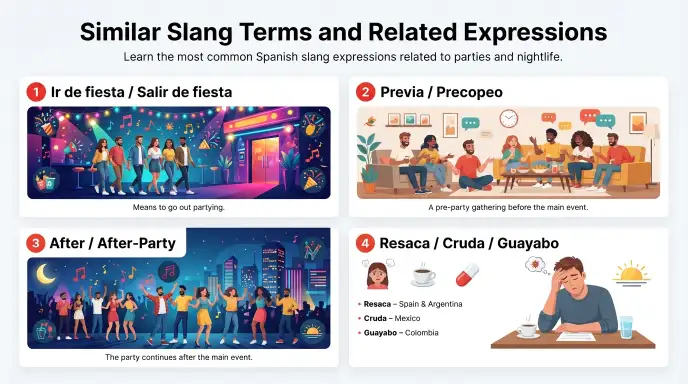
Learning a few related expressions makes conversations easier. Native speakers use these words every day.
Ir de fiesta / Salir de fiesta
These phrases mean to go out partying. They are common in many Spanish-speaking countries.
Previa / Precopeo
These words describe a small gathering before the main party. Friends meet, eat, or have drinks before going to a club or event.
After / After-Party
Many Spanish speakers use the English word after. It means a party that continues after the main event ends.
Resaca / Cruda / Guayabo
These words mean hangover.
- Resaca is common in Spain and Argentina.
- Cruda is popular in Mexico.
- Guayabo is widely used in Colombia.
When Should You Avoid Using Party Slang in Spanish?
Party slang works best in casual conversations. It is not suitable for every situation.
Professional Settings
Use standard Spanish when speaking with a manager, client, or coworker. Words like evento, reunión, or celebración sound more professional.
Academic Settings
Avoid slang in school assignments, formal presentations, or official writing. Standard Spanish is the better choice.
Different Countries
A slang word may sound natural in one country but unusual in another. If you are unsure, use fiesta because everyone understands it.
Polite Alternatives to Party in Spanish Slang
If you want a neutral or formal word, choose one of these options.
| Standard Spanish | English Meaning | Best Used For |
| La fiesta | Party or celebration | Everyday conversations |
| La reunión | Gathering | Casual or professional meetings |
| El evento | Event | Formal occasions |
| La celebración | Celebration | Family and official events |
| El agasajo | Reception | Formal hosted parties |
Why Do People Use Party Slang in Spanish?
People use slang to sound natural and connect with others.
Local expressions show culture, identity, and everyday speech. They also help conversations feel relaxed.
Spanish learners understand native speakers more easily after learning regional slang. These words also make movies, music, and social media easier to follow.
Common Misunderstandings About Party in Spanish Slang
Many learners make the same mistakes.
Thinking “Fiesta” Is the Only Word
Fiesta is correct everywhere. Native speakers also use many local slang words.
Using Every Slang Word Everywhere
Each country has its own expressions. A word that sounds normal in Argentina may sound unusual in Chile or Spain.
Confusing Hanging Out With Partying
Some words mean to spend time with friends. They do not always mean a real party.
Frequently Asked Questions
1. What is the most common party in Spanish slang?
The most common word is fiesta. Many countries also use local slang such as juerga, parranda, joda, carrete, and tono.
2. What does juerga mean?
Juerga is a Spanish slang word for a fun party or a lively night out.
3. What does carrete mean in Chile?
Carrete is the most common Chilean slang word for a party. The verb carretear means to party.
4. Is parranda used in more than one country?
Yes. Parranda is popular in Mexico, Colombia, Puerto Rico, and several other Latin American countries.
5. Is party slang rude?
Most party slang is informal but not offensive. Some words related to drinking may sound inappropriate in formal situations.
6. Can I use party slang at work?
No. Formal settings usually require standard words such as evento, reunión, or celebración.
7. Which word is safest for beginners?
Fiesta is the safest choice because people understand it across the Spanish-speaking world.
8. Why do slang words change by country?
Spanish has many regional dialects. Every country develops its own slang over time.
9. Does Latin music use party slang?
Yes. Reggaeton, Latin Trap, Salsa, and other music styles often include party slang.
10. Will native speakers understand these words?
Most native speakers understand the common terms. Local slang is easiest to understand in the country where it is used.
Conclusion
Learning party in Spanish slang helps you understand real conversations and local culture. The word fiesta works almost everywhere. Regional terms like juerga, parranda, joda, carrete, and tono make your Spanish sound more natural.
Choose the slang that matches the country and the situation. You will communicate with more confidence and understand native speakers more easily.
Explore More:

Hey, I’m Jordan. I grew up in a bilingual household in LA, so Spanish and Mexican American slang has always been part of how I talk. I’ve been writing online content for five years, explaining terms the way I’d explain them to a friend meaning, tone, and when it’s actually okay to use.