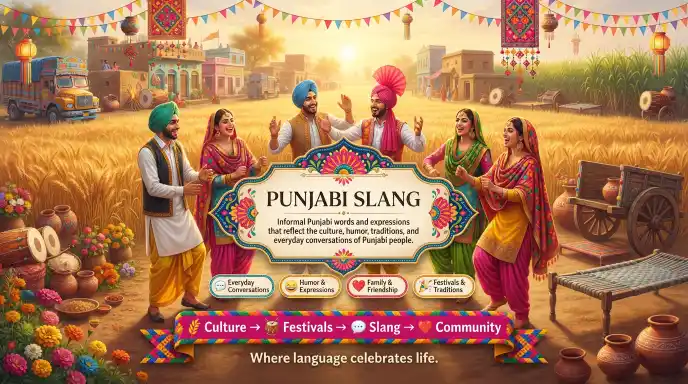
Punjabi slang refers to informal words and expressions that Punjabi speakers use in everyday conversations.
These slang terms make conversations sound more natural, friendly, and expressive. People commonly use Punjabi slang with friends, family, classmates, and on social media platforms like TikTok, Instagram, Snapchat, and YouTube.
Punjabi slang can be funny, respectful, playful, or even rude depending on the situation. So, understanding the context is important before using these words.
In this guide, you’ll learn what Punjabi slang means, where people use it, common examples, and when you should avoid certain expressions.
Quick Answer
Punjabi slang includes informal Punjabi words and phrases that people use in casual conversations instead of formal language. These expressions are popular in Punjab, India, Punjab, Pakistan, and Punjabi speaking communities around the world.
What Is Punjabi Slang?
Punjabi slang consists of casual words and expressions that people use in daily life.
Unlike formal Punjabi, slang sounds more relaxed and conversational. As a result, it is common among friends, siblings, classmates, and social media users.
People often use:
- Express emotions.
- Make conversations fun.
- Joke with friends.
- Show excitement.
- Build closer relationships.
Although many slang words are harmless, others can sound rude. Therefore, you should always understand the meaning before using them.
What Does it Mean?
Punjabi slang includes modern words, regional expressions, and local phrases that are popular in everyday speech.
Some slang words have existed for many years. However, social media has introduced many new expressions that younger speakers now use regularly.
For example, someone may use:
- Greet a friend.
- Praise someone.
- Make a joke.
- Show surprise.
- Express frustration.
- React to good news.
These expressions make conversations sound more natural than formal Punjabi.
Common Words
Many words have positive meanings, while others should only be used in informal settings.
| Slang | Meaning | Tone |
| Yaar | Friend or buddy | Friendly |
| Veere | Brother or close friend | Friendly |
| Panga | Trouble or conflict | Casual |
| Chak De | Give it your best | Motivational |
| Att | Awesome or amazing | Positive |
| Sira | Excellent or outstanding | Positive |
| Tashan | Style or attitude | Casual |
| Fuddu | Foolish person | Negative |
| Pataka | Attractive person | Informal |
| Ghaint | Excellent or impressive | Positive |
Where Is Commonly Used?
People use in many situations.
Everyday Conversations
Friends and family often use slang while talking at home or meeting in person.
Text Messages
Many people type these slang because it is short and familiar.
TikTok
Creators use Punjabi slang in captions, comments, and short videos.
People often include slang in reels, stories, and captions.
Snapchat
Friends use while chatting or sharing photos.
Music and Movies
Punjabi songs and films frequently include slang to make conversations sound authentic.
Different Types
Punjabi slang is not the same everywhere. Instead, the words often change based on the region, age group, and situation.
Traditional
Some words have been part of Punjabi conversations for generations.
People still use these expressions with friends and family because they sound natural.
Modern
Social media has introduced many new slang words.
Young people often mix Punjabi with English or Urdu while chatting online. As a result, modern slang changes quickly.
Regional
Punjabi spoken in Pakistan and India shares many similarities.
However, each region also has unique slang words and expressions. Some terms are common in Pakistani Punjab, while others are more popular in Indian Punjab.
Is Punjabi Slang Offensive?
It depends on the word you use.
Many Punjabi slang expressions are friendly and respectful. However, some words can sound rude or insulting.
| Type | Appropriate? |
| Friendly slang | ✅ Yes |
| Funny slang | ✅ Usually |
| Family conversations | ✅ Yes |
| Social media | ✅ Yes |
| Offensive slang | ❌ No |
| Workplace | ⚠️ Use carefully |
Therefore, always understand the meaning before using a slang word.
Real Life Examples
These examples show how people naturally use these slang.
Example 1
Person A: How was the match?
Person B: It was att!
(Meaning: It was amazing.)
Example 2
Text Message
You’re my yaar forever.
(Meaning: You’re my close friend.)
Example 3
Instagram Caption
Today’s trip was sira!
(Meaning: Today’s trip was excellent.)
Example 4
Conversation
Person A: Don’t take panga with him.
Person B: Don’t worry. I won’t.
(Meaning: Don’t start trouble with him.)
Example 5
Friends Talking
Person A: Your new bike looks great.
Person B: Thanks, veere!
(Meaning: Thanks, brother.)
Origin and History
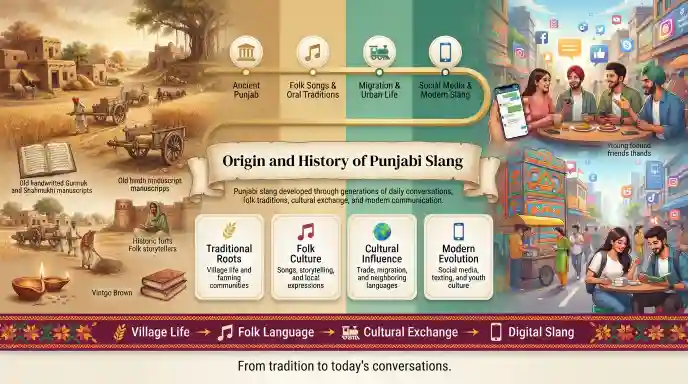
Punjabi slang has developed over many generations.
People created informal expressions to make conversations shorter, friendlier, and more expressive. Later, music, movies, television, and social media helped these words spread to a larger audience.
Today, Punjabi slang continues to evolve because younger generations regularly create new expressions. At the same time, many traditional slang words remain popular in everyday conversations.
Regional Differences in Punjabi Slang
Punjabi slang is not exactly the same in every region. Local culture, pronunciation, and the influence of nearby languages have created different expressions across Punjabi-speaking areas. Although many words are understood everywhere, some slang terms are unique to specific regions.
Majha
Majha is often considered the heart of Punjabi culture. Slang from this region is widely recognized and is commonly heard in traditional Punjabi conversations, folk music, and local storytelling.
Doaba
Doaba slang includes many expressions used in both rural and urban communities. Because many people from this region have migrated abroad, some modern Doaba slang also includes English influences.
Malwa
Malwa has its own style of pronunciation and vocabulary. Some slang words used in this region may sound different from those spoken in other parts of Punjab, even when they have similar meanings.
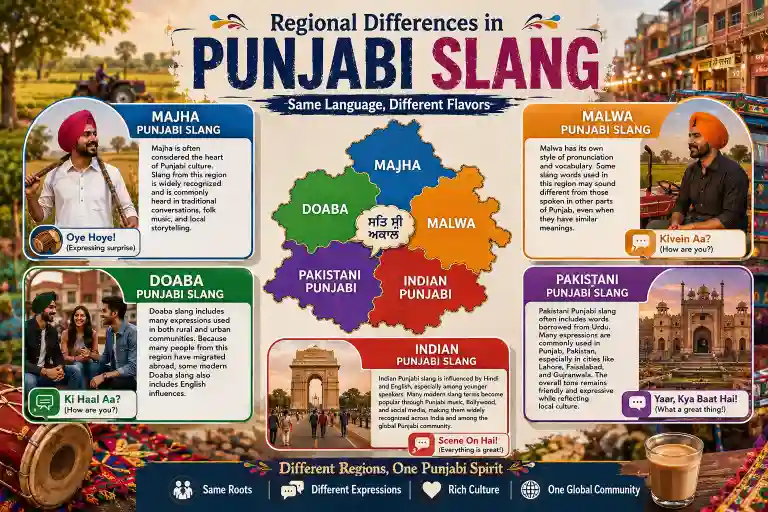
Pakistani
Pakistani Punjabi slang often includes words borrowed from Urdu. Many expressions are commonly used in Punjab, Pakistan, especially in cities like Lahore, Faisalabad, and Gujranwala. The overall tone remains friendly and expressive while reflecting local culture.
Indian
Indian Punjabi slang is influenced by Hindi and English, especially among younger speakers. Many modern slang terms become popular through Punjabi music, Bollywood, and social media, making them widely recognized across India and among the global Punjabi community.
Pakistan vs India
Although Punjabi is spoken in both countries, some slang words differ.
| Pakistani Punjabi | Indian Punjabi | Meaning |
| Veere | Veere | Brother or close friend |
| Yaar | Yaar | Friend |
| Att | Att | Amazing |
| Ghaint | Ghaint | Excellent |
| Panga | Panga | Trouble |
However, pronunciation, spelling, and a few local expressions may change depending on the region. So, listening to native speakers is the best way to understand local slang.
Across Different Countries
Punjabi speaking communities live in many parts of the world, so slang has naturally developed in different ways. Local languages and cultures influence the words people use in everyday conversations.
Pakistan
Punjabi slang in Pakistan often includes Urdu expressions and local vocabulary. It is commonly heard in homes, markets, and casual conversations throughout Punjab.
India
Indian Punjabi slang is influenced by Hindi and English. Many modern expressions become popular through Punjabi music, films, and digital media.
Canada
Canada has one of the largest Punjabi communities outside South Asia. Young speakers often combine Punjabi slang with English, creating unique expressions used in schools, workplaces, and social media.
United Kingdom
British Punjabis also mix Punjabi with English in daily conversations. Slang continues to evolve as younger generations create new expressions while keeping traditional Punjabi words alive.
Why Do People Use?
People use Punjabi slang because it makes conversations more natural.
Common reasons include:
- Talking with friends.
- Expressing emotions.
- Adding humor.
- Making conversations shorter.
- Following social media trends.
- Showing local culture.
- Building friendly relationships.
Because these expressions feel natural, they are common in everyday speech.
When Should You Avoid Using Punjabi Slang?
Punjabi slang is useful in casual conversations.
However, avoid using slang in situations that require formal language.
Do not use it:
- During job interviews.
- In business emails.
- In official documents.
- At formal meetings.
- In academic writing.
- While speaking with someone who may not understand Punjabi.
Instead, use standard Punjabi or English when professionalism is important.
Common Misunderstandings
Many people misunderstand. So, here are a few common myths.
Punjabi Slang Is Always Rude
This is incorrect.
Most Punjabi words are friendly and harmless. However, a few expressions can be offensive.
All Punjabi Speakers Use the Same Slang
Different cities and regions often have different expressions.
Therefore, you may hear different slang in Lahore, Faisalabad, Amritsar, or Ludhiana.
Punjabi Slang Never Changes
New slang appears every year.
As a result, social media and music continue to introduce fresh expressions to younger audiences.
Key Takeaways
- Punjabi slang includes informal words and phrases.
- People use it in everyday conversations and online chats.
- Many slang words are friendly, while some can be offensive.
- Music, movies, and social media have made these slang more popular.
- Regional differences exist between Pakistani and Indian Punjabi.
- Always understand the meaning before using a new slang word.
- Formal situations usually require standard language.
Pronunciation Tips
Good pronunciation helps you sound more natural when using these slang. Since many slang words are spoken quickly in casual conversations, listening carefully to native speakers is very important.
These tips can help:
- Listen before repeating new words.
- Practice difficult Punjabi sounds slowly.
- Pay attention to stress and pronunciation.
- Learn from songs, movies, and conversations.
- Repeat common slang expressions regularly.
With practice, your pronunciation will become clearer and more confident.
Frequently Asked Questions
Q1. What is Punjabi slang?
Punjabi slang includes informal words and phrases that people use in casual conversations instead of formal Punjabi. These expressions are common among friends, family members, and social media users.
Q2. Is Punjabi slang different in Pakistan and India?
Yes. Punjabi speakers in Pakistan and India share many words. However, some expressions, pronunciations, and spellings differ depending on the region.
Q3. What is the most common Punjabi slang word?
One of the most common Punjabi words is yaar, which means friend or buddy. People use it every day in conversations and text messages.
Q4. Is Punjabi slang offensive?
Not always. Many Punjabi words are friendly and respectful. However, some expressions can sound rude or insulting. Therefore, always understand the meaning before using a new slang word.
Q5. Where do people use Punjabi slang?
People commonly use in:
- Text messages
- Everyday conversations
- TikTok
- Snapchat
- YouTube
- Punjabi songs and movies
Q6. Can I use Punjabi slang in professional conversations?
It is better to avoid slang in formal situations. Instead, use standard Punjabi or English during business meetings, interviews, academic writing, and official communication.
Q7. Why is Punjabi slang so popular?
Punjabi slang sounds friendly, expressive, and natural. Because it helps people connect with others, it has become popular in everyday conversations and on social media.
Q8. Does Punjabi slang change over time?
Yes. New slang words appear regularly because of music, movies, and social media. At the same time, many traditional expressions remain popular.
Q9. How can I learn Punjabi slang?
You can learn by:
- Talking with native Punjabi speakers.
- Watching Punjabi movies.
- Listening to Punjabi songs.
- Following Punjabi creators on social media.
- Reading language guides and slang articles.
Q10. Should I use Punjabi slang with everyone?
No. Use these words with people who understand the language and the context. However, choose formal language when speaking with strangers, teachers, customers, or professionals.
Conclusion
Learning Punjabi slang helps you understand everyday conversations, social media posts, movies, and songs more easily. Although many slang words are friendly and fun, some expressions may sound rude if you use them in the wrong situation. Therefore, always learn the meaning and the context before adding new slang to your vocabulary.
If you are learning Punjabi or simply enjoy its culture, knowing common words can make your conversations sound more natural. Overall, start with friendly expressions like yaar, veere, att, and sira, and use them only in suitable situations.
Discover More:

Hi, I’m Sarah. I studied Communications at the University of Texas and have spent the last six years writing about internet culture and Gen Z slang across TikTok, Twitter, and everyday conversations. I focus on real usage, not just dictionary definitions.